
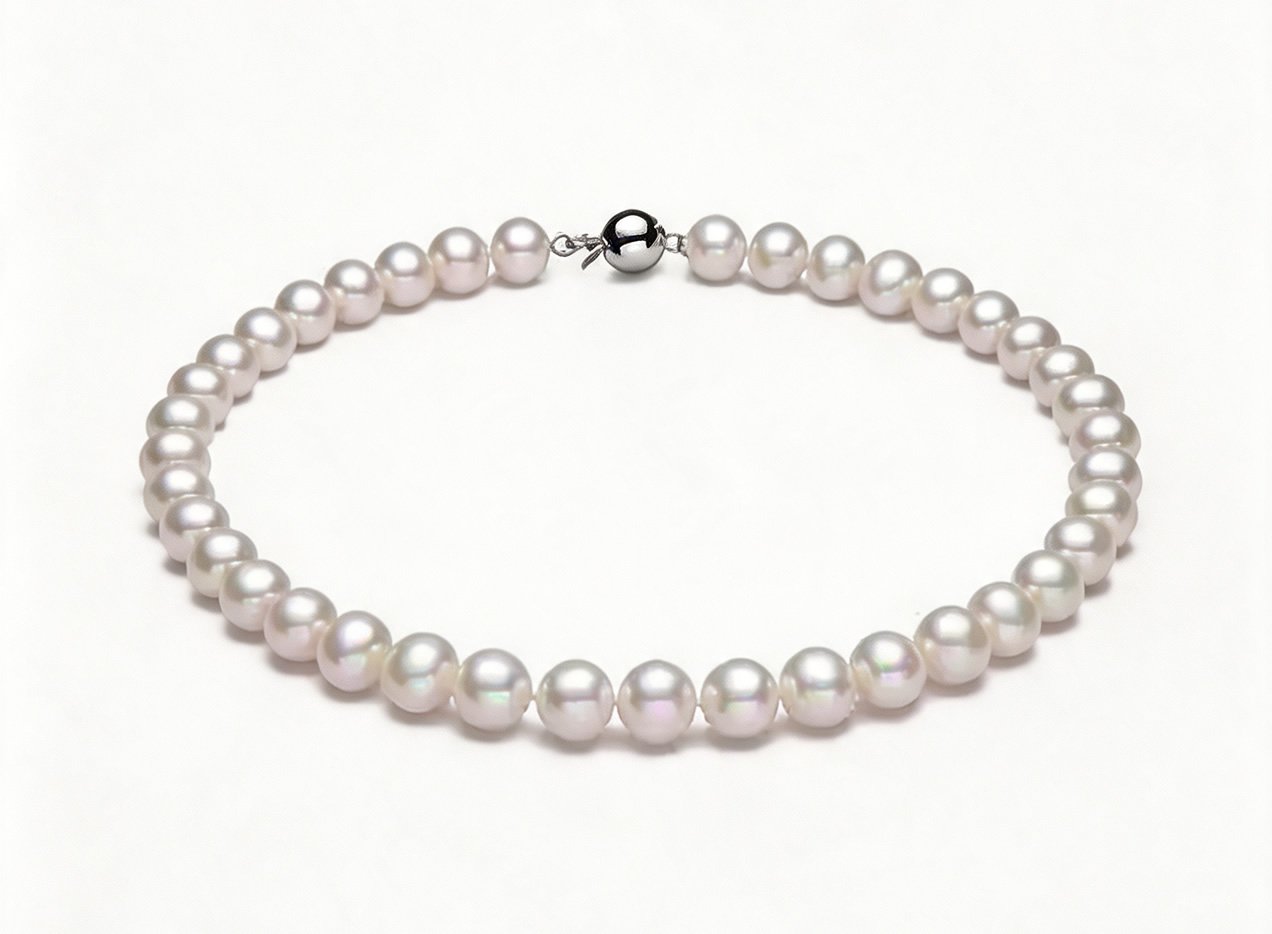
How to Grade a Pearl: Luster, Surface, Shape
Walk into any pearl showroom and you will hear the same three words repeated like a mantra: luster, surface, shape. They are the three factors that determine a pearl’s value, but they are also the three factors that are easiest to evaluate once you know what to look for. Bring this guide with you — or send it to anyone you are buying for.
1. Luster — the most important factor
Luster is the sharpness and brightness of the light reflected on a pearl’s surface. A high-luster pearl will show a clear, almost mirror-like reflection. A low-luster pearl will look chalky, dull, or waxy.
The test: hold the pearl under a single light source (a window, a lamp). You should see a bright, well-defined reflection of the light bulb on the surface. If you can read text reflected in the pearl, you are looking at a very high-luster piece.
2. Surface — fewer marks, more value
Surface quality refers to the absence of blemishes — spots, bumps, wrinkles, or pits. Truly flawless pearls are extremely rare, so grading systems rate pearls by the visibility of surface marks, not their absolute absence. A pearl with a single small mark near the drill hole is still considered high-grade if the mark is invisible when worn.
The test: roll the pearl under a single light. Look for interruptions in the luster — places where the surface looks textured or matte. The fewer the interruptions, the higher the grade.
3. Shape — round is most expensive, but not always best
Perfectly round pearls are the rarest and most expensive, but they are not always the most interesting. Baroque, button, and teardrop-shaped pearls are increasingly popular in modern jewelry design — and they can be every bit as lustrous and well-surfaced as their round counterparts.
- Round — the classic, most valuable shape
- Near-round — visually round, slightly off-spherical. Great value.
- Baroque — irregular, organic, dramatic. Designers love these.
- Button — flat on one side. Perfect for earrings and pendants.
The other four factors
Beyond the big three, professional graders also consider color (body color + overtone), nacre thickness (durable pearls are thick-nacre), size (larger is more expensive), and matching (how well a strand of pearls hangs together). For single pieces, matching does not apply. For matched pairs and strands, it is critical.
For a deeper look at the seven-point grading system, read our guide to the four pearl types first — it gives you the foundation for evaluating any pearl you encounter.